
After working on the first version of LUXR as a frontend developer for Connecteed, I decided to take over the project independently. The platform had been handed off to other developers and needed a complete rewrite. I rebuilt everything from scratch: architecture, backend, frontend, payment system, emails, pricing - every single aspect. 297 commits on a single branch, handling both frontend and backend entirely on my own.
The site is live at luxr.app
From Frontend to Full-Stack
In the first version, my role was limited to frontend implementation. With LUXR 2.0, I managed the entire technical ecosystem: from database design to pricing logic, from the authentication system to transactional emails. This is not an incremental update - it is a complete rewrite on an entirely different stack.
The architecture was redesigned as a monorepo with three core packages: the Next.js application for the frontend, a tRPC-based API package for the backend, and a database package with Prisma and BetterAuth for persistence and authentication.
Booking System
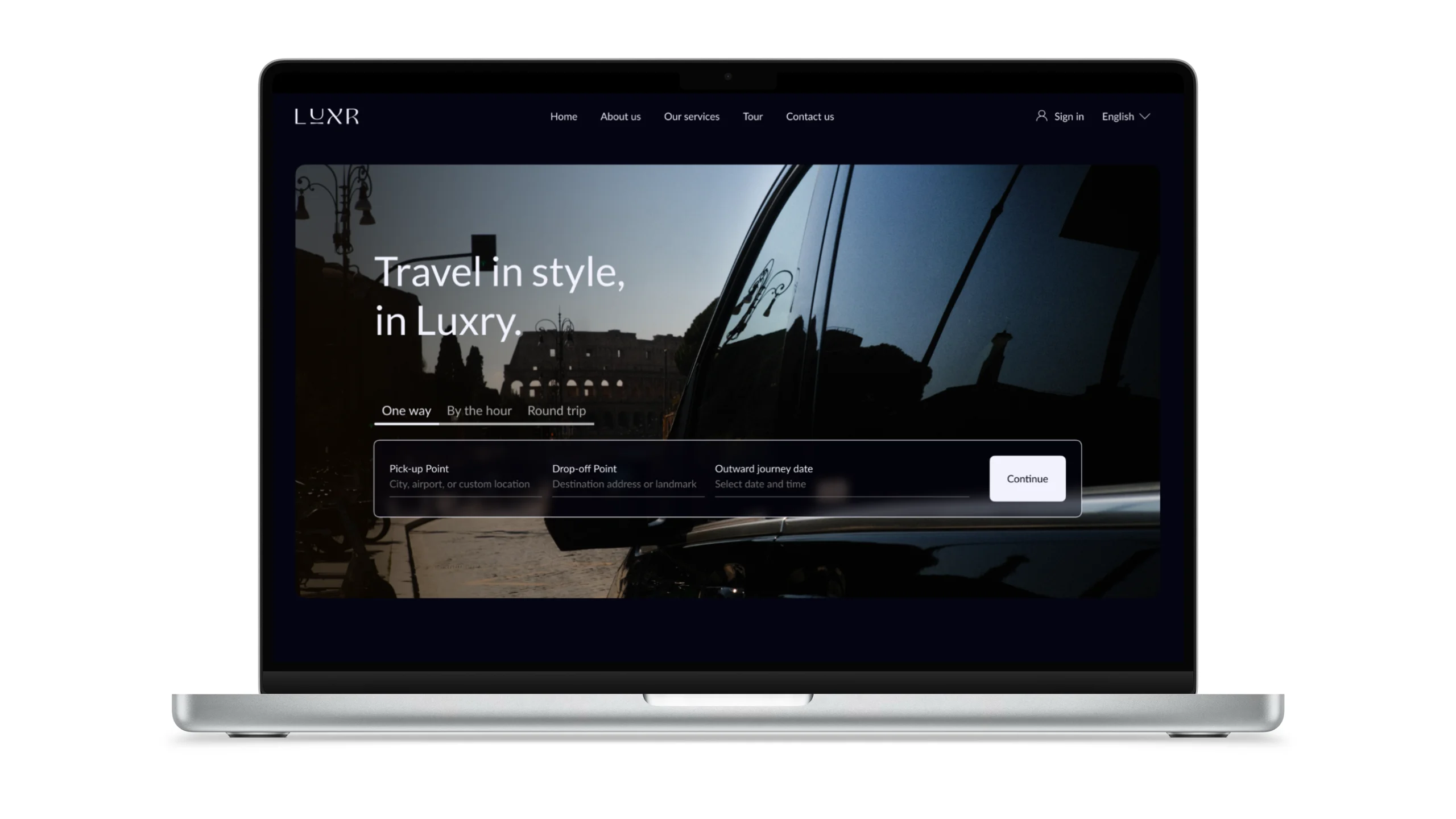
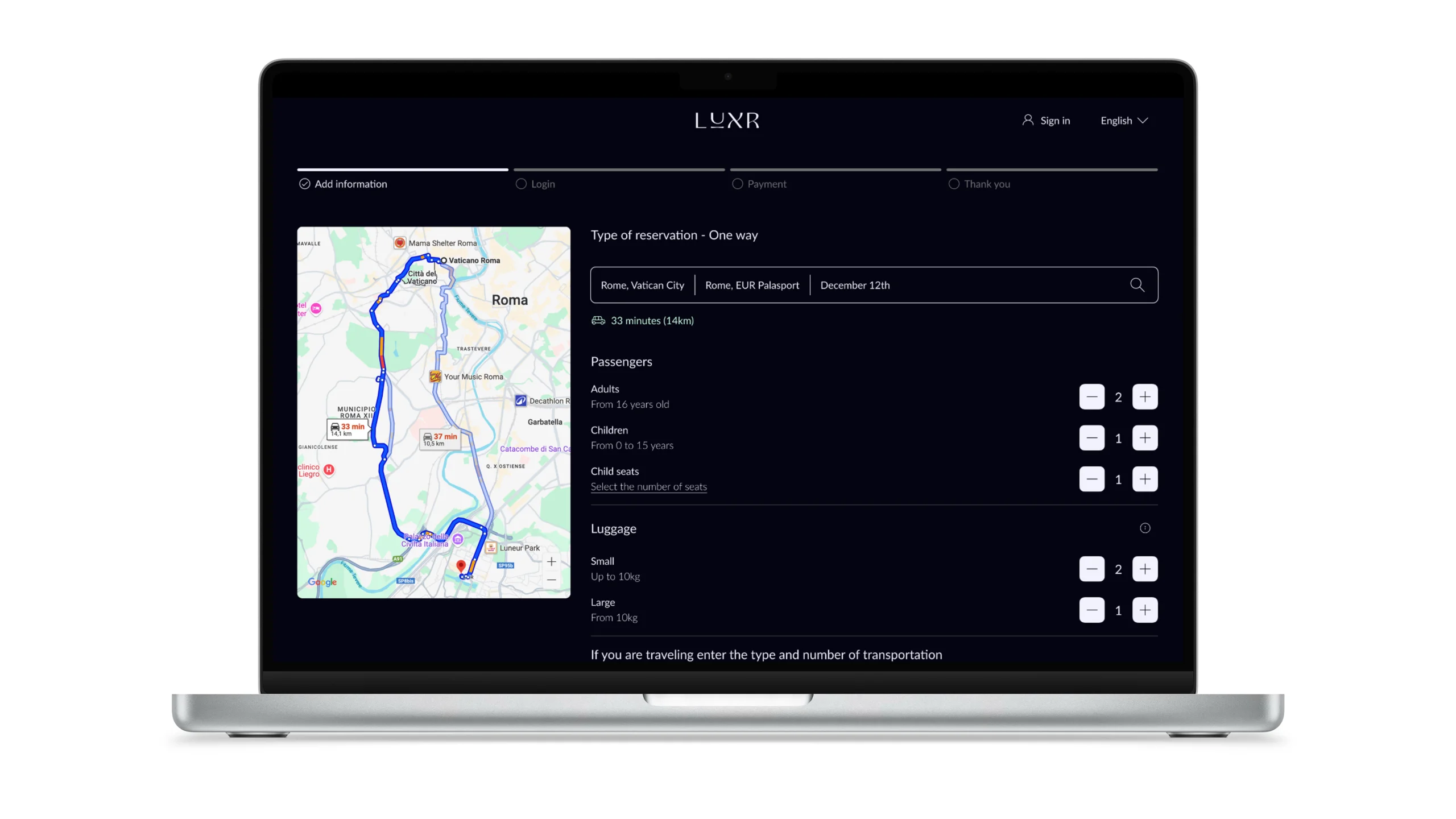
The heart of the platform is the multi-step booking flow: origin/destination selection with Google Places autocomplete, trip type choice (one-way, round-trip, hourly, tour), real-time price calculation based on geographic zones, and integrated Stripe payment. The map displays the route with a custom dark theme consistent with the brand.
The pricing engine uses a zone-based system with Haversine distance calculation, supporting four pricing modes: zone-based, fixed route, kilometric and hourly. Seasonal modifiers and supplements (night, short notice, child seats, extra luggage) are applied automatically.
Backend and Admin Dashboard
I built a complete backend with tRPC handling all operations: bookings, payments, driver assignment, and email notifications. The admin dashboard allows managing every operational aspect: confirming or rejecting bookings, assigning drivers, processing Stripe refunds, monitoring card authorizations for cash payments, and exporting data to CSV.
The authentication system uses BetterAuth with support for email/password login and Google OAuth, secure sessions and role management (user, admin, driver). Transactional emails are built with React Email and sent via Resend: welcome, booking confirmation, completion, cancellation, driver assignment - all with multilingual support in Italian, English and Spanish.
Technology Stack
The project was built as a monorepo managed with Turborepo:
Frontend:
- Next.js 14 with App Router
- Tailwind CSS with Radix UI for components
- tRPC client for type-safe backend communication
- Google Maps API for maps, autocomplete and route calculation
- Stripe.js for client-side payment flow
- Zustand for state management
- Framer Motion for animations
- next-intl for internationalization (IT/EN/ES)
Backend:
- tRPC for end-to-end typed APIs
- Prisma ORM with PostgreSQL
- BetterAuth for authentication and sessions
- Stripe for payments, refunds and card authorizations
- React Email + Resend for transactional emails
- Custom pricing engine with Haversine zone calculation
Infrastructure:
- Turborepo for monorepo orchestration
- Docker for production deployment
- PostgreSQL as database
- Cron endpoints for automations (driver assignment, card authorizations)
Implemented features:
- Complete authentication with email/password and Google OAuth
- Multi-step booking with 4 trip types
- Dynamic pricing engine with zones, fixed routes, kilometric and hourly rates
- Stripe payments with refund management and card authorization for cash payments
- 6+ transactional email templates with multilingual support (React Email + Resend)
- Admin dashboard with booking, driver, pricing management and CSV export
- Driver system with automatic assignment via cron and email notifications
- Full trilingual support (Italian, English, Spanish)
- Custom dark theme map with Google Maps